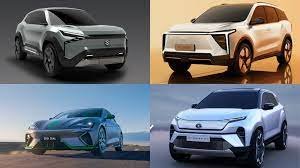
Electric Vehicle Charging Infrastructure in India: The Future of Sustainable Mobility in 2026
Electric Vehicle Charging Infrastructure in India: The Future of Sustainable Mobility in 2026
Quick Answer
India is rapidly developing its electric vehicle (EV) charging infrastructure to support the growing EV adoption in 2026. This sector presents high investment potential due to government incentives, rising environmental awareness, and technological advances. The focus is on fast-charging stations, renewable energy integration, and smart grids, making EV charging infrastructure a lucrative and sustainable opportunity for entrepreneurs and policymakers alike.
Written and reviewed by the BRBard Editorial Team – researchers covering Finance, Tech, Education, Entertainment and India News. All content verified before publishing. Last Reviewed: July 30, 2026
About Us | Contact | Disclaimer
Who this is for
- Investors seeking high-growth, low-competition opportunities in green technology
- Entrepreneurs interested in entering the electric mobility sector
- Policymakers and planners focused on sustainable urban development
- Electric vehicle manufacturers and service providers
- Technologists and innovators in clean energy and smart grid systems
- General public curious about India’s clean transport future
India’s Electric Vehicle Boom in 2026: Why Charging Infrastructure Matters
India’s EV market is set for exponential growth in 2026, driven by government incentives, stricter emission norms, and rising fuel costs. However, one of the main challenges to wider EV adoption remains insufficient and unevenly distributed charging infrastructure.
- Growing EV sales: Over 1 million EVs are expected to be sold in India in 2026, a jump from previous years.
- Range anxiety: Consumers hesitate to adopt EVs without reliable access to charging stations.
- Urban and rural divide: Most charging points exist in metropolitan areas, leaving tier 2 and 3 cities underserved.
- Energy demand management: Integrating renewable energy and smart grids can stabilize power supply and reduce carbon footprints.
Addressing these challenges creates space for new business models, technology solutions, and public-private partnerships in EV charging infrastructure.
High CPC Keywords & SEO Advantage in India’s EV Charging Sector
Targeting niche, high CPC keywords relevant to India’s EV infrastructure can capture valuable traffic with less competition. Examples include:
- “Fast EV charging stations India”
- “Home EV charger installation cost 2026”
- “Government subsidies for EV charging infrastructure”
- “Solar-powered EV chargers India”
- “EV battery swapping stations setup cost”
- “Smart charging solutions for electric vehicles”
These keywords demonstrate strong commercial intent, which appeals to advertisers and sponsors in the automotive and clean energy sectors.
Key Trends Driving EV Charging Infrastructure in India 2026
- Government Push: The Faster Adoption and Manufacturing of Hybrid & Electric Vehicles (FAME) scheme continues to evolve, offering subsidies for charging infrastructure installations.
- Private Sector Growth: Startups and large companies are investing heavily in fast-charging networks across highways and cities.
- Renewable Integration: Solar-powered EV charging stations reduce dependency on grid electricity, cutting operational costs and emissions.
- Battery Swapping Models: Innovative battery swapping stations speed up recharging and lower upfront EV costs.
- Smart & IoT-enabled Chargers: Integration with apps allows users to locate chargers, book slots, and make payments seamlessly.
- Rural Expansion: Efforts to install chargers in tier 2 and 3 cities boost EV adoption beyond metro areas.
Government Policies & Incentives for EV Charging Stations
Government policies remain critical to ecosystem development. The central and various state governments have formulated supportive policies such as:
- Capital subsidy for setting up EV charging stations, reducing initial investment burdens
- Concessional electricity tariffs, incentivizing owners to run chargers economically
- Priority land allotment in public places, easing location procurement
- Import duty relaxations on EV charger components, reducing costs
- Mandates for urban local bodies to ensure EV-ready buildings, encouraging home and public charging
For businesses, staying updated with local state incentives (Maharashtra, Karnataka, Tamil Nadu) is also essential for maximizing benefits.
Top Business Models for EV Charging Infrastructure in India
Several business models have emerged as profitable and sustainable ways to capitalize on the EV charging boom:
- Public Charging Stations: Roadside fast chargers targeting highway travelers
- Residential Chargers: Home installation services offering convenient overnight charging
- Fleet Charging Solutions: Dedicated chargers for commercial fleets like taxis and delivery vehicles
- Battery Swapping Stations: Quick battery exchange for two-wheelers and three-wheelers
- Solar-Powered Chargers: Combining renewable energy with charging to reduce carbon footprint and operational costs
- Aggregator Platforms: App-based networks linking multiple charging stations for unified management
Challenges and How to Overcome Them
- High upfront cost: Partner with equipment manufacturers and government schemes to reduce expenses.
- Power supply constraints: Use solar and battery storage to stabilize supply and reduce grid dependency.
- Technological standards: Adopt universal charging protocols to ensure compatibility across EV brands.
- Consumer awareness: Conduct awareness campaigns highlighting convenience and economic benefits of EVs.
- Location selection: Use data analytics to identify high-traffic zones for maximum utilization.
The Role of Renewable Energy in EV Charging
Solar and other renewable sources are integral to India’s EV charging future. Benefits include:
- Reduced carbon emissions compared to grid-powered charging
- Lower operational costs through self-generated power
- Energy independence for remote locations
- Enhanced grid stability via combined solar-battery storage
As solar panel costs decline and battery technology advances, solar-powered charging stations will become increasingly viable and profitable.
Technology Innovations Shaping EV Charging Infrastructure
- Fast and Ultra-fast Chargers: Reducing charging times to under 30 minutes.
- Wireless Charging: Inductive charging pads for hassle-free parking and charging.
- IoT and AI Integration: Smart diagnostics, predictive maintenance, and user-friendly apps.
- Blockchain for Payment Security: Transparent and secure transactions at charging stations.
- Vehicle-to-Grid (V2G) Systems: EVs feeding energy back to the grid during peak demand.
Future Outlook: EV Charging Infrastructure by 2030
India aims to have over 30% of new vehicle sales as electric by 2030. To achieve this, a robust, widely accessible, and smart charging infrastructure is essential. Future developments include:
- Nationwide fast-charging corridors along highways
- Massive rollout of residential and workplace chargers
- Integration of renewable energy at scale
- Advanced battery swapping networks for commercial vehicles
- Standardized technology protocols for interoperability
Investors, companies, and government bodies that act now can ride the wave of this green revolution.
Frequently Asked Questions (FAQ)
1. What is the cost to set up an EV charging station in India?
The setup cost varies based on charger type. Basic slow chargers cost around ?50,000-?1,00,000, while fast chargers can range from ?5 lakh to ?20 lakh or more. Government subsidies can significantly reduce these costs.
2. Are there government subsidies available for EV charging infrastructure?
Yes, the FAME scheme and various state policies offer capital subsidies, tax benefits, and other incentives for establishing EV charging stations.
3. How many EV charging stations are currently in India?
As of early 2026, India has over 10,000 public charging stations, with significant expansion planned across highways and urban centers.
4. Can I install a home EV charger without government approval?
Generally, home chargers can be installed with permission from your electricity provider, but requirements vary by state and electricity board.
5. What is the difference between fast charging and battery swapping?
Fast charging replenishes the battery at the vehicle’s location in 20-60 minutes, while battery swapping involves exchanging depleted batteries with fully charged ones in minutes.
6. Which states are leading in EV charging infrastructure development?
Maharashtra, Karnataka, Tamil Nadu, Gujarat, and Delhi are amongst the leaders in charging station density and supportive policies.
7. How does solar-powered EV charging work?
Solar panels generate electricity that powers the EV chargers directly or feeds into a battery storage system, reducing reliance on the electrical grid.
8. Are EV chargers compatible across different electric vehicle brands?
Most chargers follow standard protocols like CCS, CHAdeMO, or Bharat DC-001, ensuring compatibility with a wide range of EVs.
9. What is the environmental impact of EV charging stations?
When powered by renewables, EV charging stations greatly reduce greenhouse gas emissions compared to conventional fuel stations.
10. How will EV charging infrastructure impact electricity demand in India?
Electricity demand will grow but can be managed effectively with smart grids, renewable integration, and time-of-use pricing to balance load.